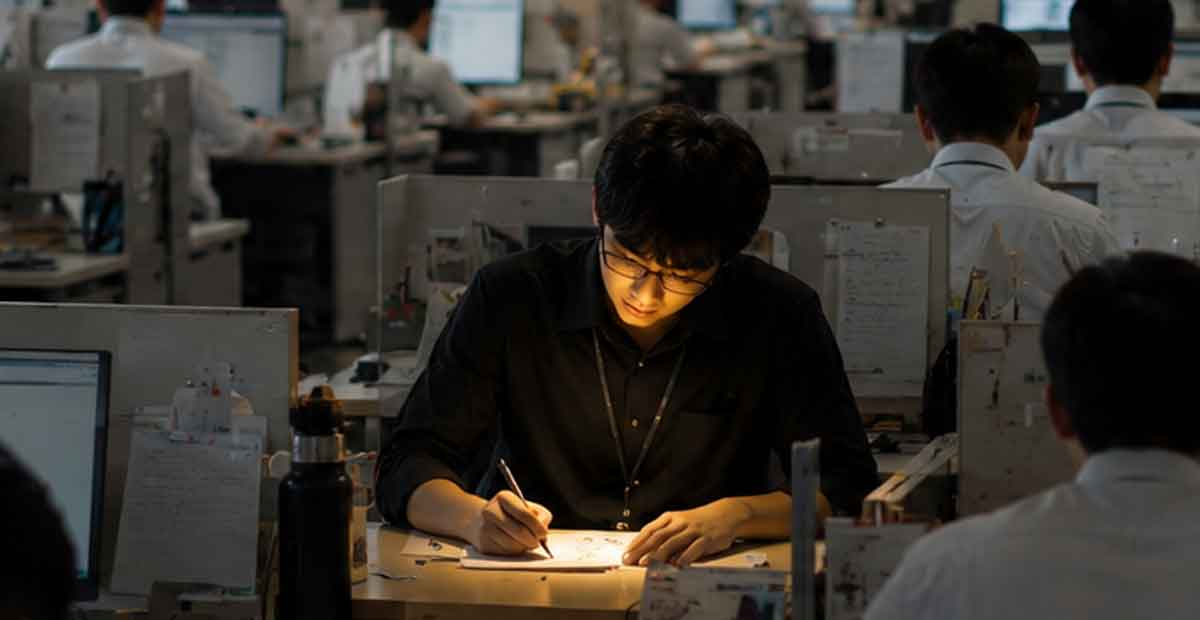
From a Competence Economy to an Exception Economy
By: John F Groom
For most of human history, being competent was enough. Most people worked in agriculture. Farming methods were passed from one generation to another, and while some farmers were certainly better than others, extraordinary agricultural talent was rarely necessary. You learned how people in your community farmed, worked hard enough, and produced what you could.
The same pattern continued as occupations became more specialized. Sailors needed certain skills and a willingness to endure conditions that most people today would find appalling, but ships did not require every crew member to be an exceptional sailor. Lawyers varied enormously in ability, yet generations of thoroughly mediocre lawyers made perfectly good livings. The same could be said of doctors, teachers, accountants, professors, programmers, graphic designers, administrators, and thousands of other occupations.
There were always exceptional performers. But the economy did not consist only of exceptional performers. It needed millions of competent ones. That may be one of the most important things artificial intelligence changes.
The Competence Economy
The modern economy created an enormous number of occupations with a relatively straightforward bargain: acquire a skill, reach an acceptable level of competence, perform useful work, and get paid.
The required threshold varied enormously. Becoming a physician required far more training than becoming a clerk, but within each occupation there was generally room for a broad distribution of ability.
You did not have to be the best accountant in town. You had to be good enough to do accounting reliably. You did not have to be a brilliant programmer. Companies needed enormous quantities of code written, tested, and maintained. You did not have to be an extraordinary commercial artist. Businesses needed brochures, advertisements, signs, catalogs, illustrations, and eventually websites and social-media graphics.
The scarcity was not necessarily exceptional ability. Often, the scarcity was simply competent human labor capable of doing the task. AI changes that scarcity.
When Competence Becomes Abundant
Suppose an organization once needed ten competent people to perform a particular cognitive task. AI does not have to become better than the world's best practitioner to disrupt those jobs. It merely has to allow two or three people, assisted by AI, to produce what previously required ten. The important economic change is that ordinary competence becomes abundant.
Writing ordinary computer code becomes easier. Producing an ordinary advertisement becomes easier. Creating an ordinary illustration becomes easier. Summarizing a legal document becomes easier. Preparing an ordinary presentation becomes easier. Translating ordinary text becomes easier. Analyzing an ordinary spreadsheet becomes easier.
The economic value of a capability tends to decline when that capability becomes abundant. This does not mean programmers, lawyers, designers, or analysts disappear. It means the characteristics that make the remaining humans valuable begin to change.
The Mid-Level Problem
Consider programming. For decades, being a reasonably good programmer was itself a valuable capability. Organizations needed large numbers of people who could translate specifications into functioning software.
AI can increasingly perform parts of that work. But this does not necessarily reduce the value of an exceptional technologist. It may do precisely the opposite.
Someone still has to understand what should be built. Someone has to understand how complicated systems fit together. Someone has to recognize when the AI's answer is technically plausible but fundamentally wrong. Someone has to understand the customer, the technology, the architecture, and the larger objective.
And now that person has extraordinarily powerful AI tools available. The result could therefore be paradoxical: demand for average programmers declines while the productive and economic value of exceptional programmers increases.
The same phenomenon can occur elsewhere. If AI can generate competent advertising images almost instantly, there may be much less demand for ordinary commercial photography and modeling. But there can still be enormous demand for a particular human model whose appearance, personality, or cultural significance is genuinely exceptional.
AI can produce competent writing while making an exceptional writer's judgment, ideas, and voice more valuable. It can perform routine legal analysis while increasing the leverage of an exceptional lawyer handling unusual problems. Automation does not necessarily eliminate the top of a profession. It may hollow out its middle.
Professional Sports Already Work This Way
Professional athletics provides a useful model because it has never really had a competence economy. Being a pretty good tennis player has essentially no economic value as a professional tennis player. Millions of people can play tennis competently, but only an extraordinarily small percentage can make a living competing professionally.
The threshold is brutally high because the world does not need millions of professional tennis players. It needs a relatively tiny number, and modern communications allow billions of people to watch the same exceptional performers. The result is an exception economy.
Being in the 60th percentile is not enough. Being in the 90th percentile probably is not enough. Depending on the activity, even being in the 99th percentile may not be enough. AI could push many cognitive occupations somewhat closer to this structure.
The world will still need software. It may simply need fewer humans to produce vastly more of it. It will still need advertising images, but it may need far fewer photographers, models, and graphic artists to produce them. It will still need analysis, but it may need fewer people whose principal contribution is performing routine analysis. Human beings then compete increasingly on whatever remains difficult to reproduce.
The Other Side of the Economy
Not every occupation will follow this pattern at the same speed. Consider a massage therapist. An average massage therapist may continue to make a perfectly reasonable living even when an average graphic designer has difficulty doing so. The difference is not necessarily that massage requires greater talent. It is that someone still has to physically give the massage.
The same protection applies, to varying degrees, to plumbers, electricians, caregivers, mechanics, construction workers, nurses, cleaners, and many other people working in complex physical environments.
AI can already explain how to replace a pipe. That is very different from sending a machine into an old house, finding the leaking pipe behind a wall, and replacing it economically. Robotics will progressively change this distinction as well. But manipulating the physical world is a different problem from manipulating information.
This suggests a potential division in the future human economy. Humans will retain value where they can do something exceptionally well and where machines still cannot economically perform the physical task at all. Routine cognitive work may be caught between them.
What Are You Exceptionally Good At?
This creates a profound problem for traditional career advice. A young person has traditionally been encouraged to ask, "What am I interested in?" Then perhaps, "What careers fit those interests?" Those remain useful questions, but they may no longer be sufficient.
Someone entering the workforce today may need to ask, "What could I become exceptionally good at?" And then, "Will that capability remain scarce when AI is applied to it?" Those questions lead to very different career decisions.
A young person might enjoy graphic design. That does not necessarily mean spending years becoming a competent conventional graphic designer is a good investment. But suppose that person has extraordinary visual judgment, an unusual ability to understand what consumers respond to, tremendous artistic originality, or a combination of good design instincts with exceptional sales ability.
That changes the calculation. The objective is not necessarily to abandon graphic design. It is to determine what the individual can contribute that ordinary competence plus AI cannot easily reproduce.
Exceptional Combinations Count
This does not mean everyone needs to discover that they are in the top one percent of humanity at a single thing. Exceptional value can arise from combinations. Imagine someone who is a good but not brilliant programmer, understands biology unusually well, communicates clearly, and is excellent at working with physicians. None of those abilities independently needs to be extraordinary. The combination might be.
Someone else might combine construction experience, moderate technical ability, strong sales skills, and fluency with AI tools. Another person might combine visual creativity, social-media intuition, and an unusual understanding of a particular subculture.
These combinations matter because labor markets do not actually purchase abstract intelligence, creativity, or sociability. They purchase solutions to particular problems. A relatively ordinary collection of individual abilities can therefore become exceptional when assembled in an unusual and valuable way.
Find the Limiting Threshold Early
There is another side to discovering exceptional potential: discovering limitations. Every ambitious pursuit has requirements. A person hoping to become an elite tennis player needs some minimum level of hand-eye coordination and athletic capacity. Someone pursuing advanced theoretical work needs sufficient abstract reasoning ability. A politician needs some capacity to interact repeatedly with the public. A professional model needs some form of appearance that the relevant market considers unusual or valuable.
These attributes do not guarantee success. The brilliant thinker may lack persistence. The extraordinarily coordinated athlete may repeatedly get injured. The charismatic politician may make terrible decisions.
Success remains dependent on timing, perseverance, opportunity, judgment, discovery, luck, and countless other variables. But some attributes function as thresholds. Below the threshold, everything else may matter very little. That makes discovering potential limitations early enormously valuable.
If a 19-year-old is considering a career requiring an attribute that he or she simply does not possess and is unlikely to develop sufficiently, discovering that at 19 is much better than discovering it at 39. Conversely, discovering an unusual capability at 19 may change the trajectory of an entire life.
Education May Have the Wrong Objective
Much of education was designed for the competence economy. Its job was largely to move people from untrained to trained, or from incompetent to competent.
Learn accounting. Learn programming. Learn graphic design. Learn how to conduct laboratory work. Obtain the credential demonstrating acceptable competence, then enter the occupation. An exception economy requires something more individualized:
Undiscovered → Tested → Differentiated → Exceptional
Education still needs to teach basic competence. But career development should increasingly involve experimentation designed to discover where an individual has unusual potential.
Try programming. Try selling. Try public speaking. Try designing. Try building things. Try mathematics. Try managing people. The important part is to measure actual performance rather than relying entirely on preferences and self-perception. When something appears unusually promising, test it further. When a possible limiting threshold appears, determine whether it is real and whether it can be improved.
The purpose is not to tell an 18-year-old what occupation they should perform for the next 50 years. It is to learn something much more fundamental: What does this particular human being appear capable of doing unusually well?
From Choosing Careers to Discovering Capability
AI may therefore change career planning in a way that goes well beyond predicting which jobs will disappear. The traditional unit of career planning has been the occupation: doctor, lawyer, programmer, designer, accountant, teacher.
The more useful unit may increasingly become the individual capability. Analytical reasoning. Judgment. Persuasion. Coordination. Creativity. Leadership. Empathy. Physical dexterity. Taste. Spatial reasoning. Risk assessment. Trust. Persistence.
And, most importantly, unusual combinations of them. Instead of asking which established occupational box a person fits into, we can ask what scarce capabilities that particular person possesses and where those capabilities can create the greatest value.
AI itself can help conduct this search. It can accumulate evidence about an individual's performance across years, suggest inexpensive experiments, identify possible limiting factors, compare abilities across domains, and continually update its assessment as new evidence appears. That could become particularly valuable at the beginning of adulthood, when interests are often vague, experience is limited, and the cost of choosing the wrong direction is greatest.
The Exception Economy
The competence economy will not disappear. We will still need people who show up, do their jobs reliably, and perform tasks that cannot economically be automated. There will remain countless circumstances where ordinary human competence is perfectly valuable.
But the direction of change seems important. For centuries, technological and economic expansion created enormous demand for people who could acquire a defined skill and perform it competently. AI makes competence itself easier to reproduce. That shifts scarcity, and therefore value, toward something else.
Sometimes that will mean extraordinary intelligence. Sometimes extraordinary creativity. Sometimes physical ability or appearance. Sometimes interpersonal skill. Sometimes judgment or trust. Sometimes the ability to operate in the physical world. And very often, it will be an unusual combination of otherwise unexceptional abilities.
The career question of the future may therefore be less: "What can you learn to do competently?" And increasingly: "What can you become exceptionally good at that will still matter?"
Whether you're exploring interoperability, dataset valuation, AI readiness, or ecosystem participation, we welcome conversations with researchers, organizations, and strategic partners interested in the future of structured data systems.
info@datauniversa.com