Building the Foundation for Trusted AI Data
DataUniversa is an AI enabling platform to make real-world data more structured, interoperable, verifiable, and useful for AI. Our work combines technology, intellectual property, data acquisition, and active operations across multiple countries to address a fundamental challenge of the AI era: valuable information often exists in fragmented, inconsistent, or disconnected systems that were never designed to work together.
Our operations include full-time employees and contractors across eight countries: India, Thailand, the UAE, the United States, Kenya, Uganda, China, and Indonesia, with data collection extending across more than 30 countries worldwide.
Team Roster →6 issued patents
5 additional DU patents filed
25-person operating network
8 countries operating
30+ countries
Data collected from 30+ countries
15,000+ evidence records
Video Documented Evidence Data across multiple domains
Built, deployed, and operating now.
Core systems and data-gathering tools operating across DataUniversa's real-world network.
Global Fast Fit
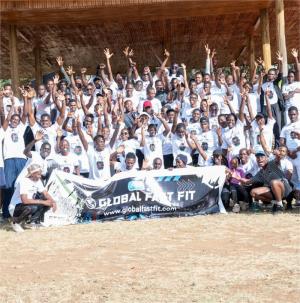
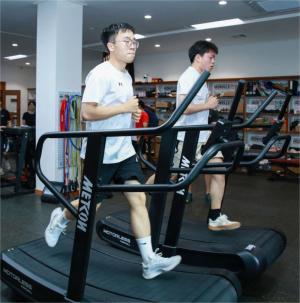
OPERATINGGlobal Fast Fit (GFF) is a global human-performance data and benchmarking system built around standardized, measurable physical activities. Participants submit performance data, often supported by video, demographic information, and consent. The system creates comparable datasets across ages, genders, countries, and populations. GFF data supports performance indexes, research, AI applications, and analysis of human physical capability.
Global South AI Programs
OPERATINGOur Global South AI Programs use practical, locally operated projects to generate useful real-world data while producing measurable benefits for participating communities. Programs in areas such as fitness, education, small business, sports, and community management serve simultaneously as operational improvement projects and data-generation environments. They test how AI and structured data systems can function in lower-resource settings rather than relying primarily on data from developed economies. These programs are carried out by Big Wave Tech, Global Fast Fit, and DataUniversa.
Global Model Intelligence Platform
OPERATINGThe Global Model Intelligence Platform (GMIP) provides a standardized identity and intelligence layer for otherwise disconnected data, including a proprietary data auditing operation. It assigns granular records persistent identities and associates them with provenance, structure, context, rights, and other relevant attributes. This allows data from different sources to be discovered, compared, combined, and reused. GMIP is a core mechanism through which DataUniversa turns isolated datasets into interoperable data infrastructure.
Data Acquisition Marketplace
OPERATINGThe Data Acquisition Marketplace is a system for identifying, pricing, and acquiring data that is specifically needed to improve existing datasets, indexes, and AI applications. Compensation can vary according to factors such as scarcity, demographic or geographic gaps, verification level, and expected utility. Instead of indiscriminately collecting more data, the marketplace directs resources toward data that adds measurable incremental value. It creates a feedback loop between data demand, scarcity, collection, and compensation.
Human-Originated Solution Intelligence
OPERATINGHuman-Originated Solution Intelligence (HOSI) captures knowledge created when people encounter real-world problems, develop solutions, test them, and learn from the results. HOSI records the problem, observations, reasoning, interventions, failures, outcomes, evidence, and transferable lessons rather than merely recording the final answer. Submissions are evaluated separately for their quality, difficulty, and potential value. The objective is to preserve valuable human problem-solving intelligence in a structured format that can be reused by people and AI systems.
DatFlash
OPERATINGDatFlash is a data-market intelligence system designed to observe and structure signals about the economic use and value of data. It tracks information such as dataset transactions, pricing, recurring data services, demand, and other market activity. These signals can help establish evidence-based assessments of what different kinds of data are worth and how demand changes over time. DatFlash therefore provides a market-signal layer alongside DataUniversa's technical evaluation of data.
RealUniversa
OPERATINGRealUniversa is the real-world execution and feasibility layer of the DataUniversa ecosystem. RealUniversa evaluates whether decision can actually be implemented given available resources, constraints, people, locations, and circumstances. It connects intelligence and decision-making to real-world action. Results can then be measured and fed back into the system to improve subsequent decisions.
Human Performance Index (HPI)
OPERATINGThe Human Performance Index (HPI) is a standardized framework for measuring and comparing human physical performance using verified real-world data. It can integrate results from multiple performance systems, including GFF benchmarks and individual exercise measurements, rather than relying on a single test. Performance is expressed through normalized indexes that allow meaningful comparison across participants and populations. As the underlying dataset expands, HPI is intended to provide an increasingly broad empirical picture of human physical capability.


DataUniversa
Guidelines for enterprise deployment of data collection efforts in resource constrained environments

EverythingTag
Universal tagging system connecting physical objects to persistent digital identities, information, and services.

Casa Command
Property intelligence and management system that organizes household assets, maintenance, information, and decisions.


MyFavArt
Art discovery and preference platform that learns individual tastes to improve personalized art recommendations.


Big Wave Tech
Accessible technology platform delivering practical digital tools and services through familiar channels across the Global South.


Attitude Media
Media platform documenting and communicating people, ideas, experiences, and stories with meaningful real-world context.


Bali Travel Partners
Travel platform connecting Bali visitors with locally grounded services, experiences, and destination intelligence.

Global Fast Fix
Medical tourism data platform that structures information on providers, procedures, costs, locations, and patient options.

Indo Art House
Platform for documenting, presenting, and connecting Indonesian artists and their work with global audiences.


"Institutional credibility is not enough. If you do not control the authority layer, you create efficiency — not leverage."
I grew up close to the center of the American establishment.
My father graduated at the top of his class from Harvard Law School and went on to build Groom Group, a major Washington law firm on Pennsylvania Avenue advising governments, regulators, and some of the largest corporations in the world. From an early age I saw how authority actually works.
My own career took a different path.
Instead of working inside established institutions, I spent decades working at their edges — building systems where paperwork breaks down, where rules don't quite match reality, and where decisions still have to be made without a clear authority layer.
One of the most formative experiences was AnnuityNet in the late 1990s, the first platform to sell variable annuities online. It was a well funded startup created by a successful software entrepreneur. Financing was arranged by Goldman Sachs, GE Equity invested, and several of the largest insurance companies in the world participated. We digitized a heavily regulated financial product and built software that encoded suitability, disclosure, and compliance rules into real transactions. I was the 4th employee hired as Director of Content and Site Development, where I dealt directly with compliance issues.
The company was acquired, but modestly.
The lesson stayed with me:
We made insurers faster.
We did not make them dependent.
Building Outside the Model
I did not start the next company inside Silicon Valley.
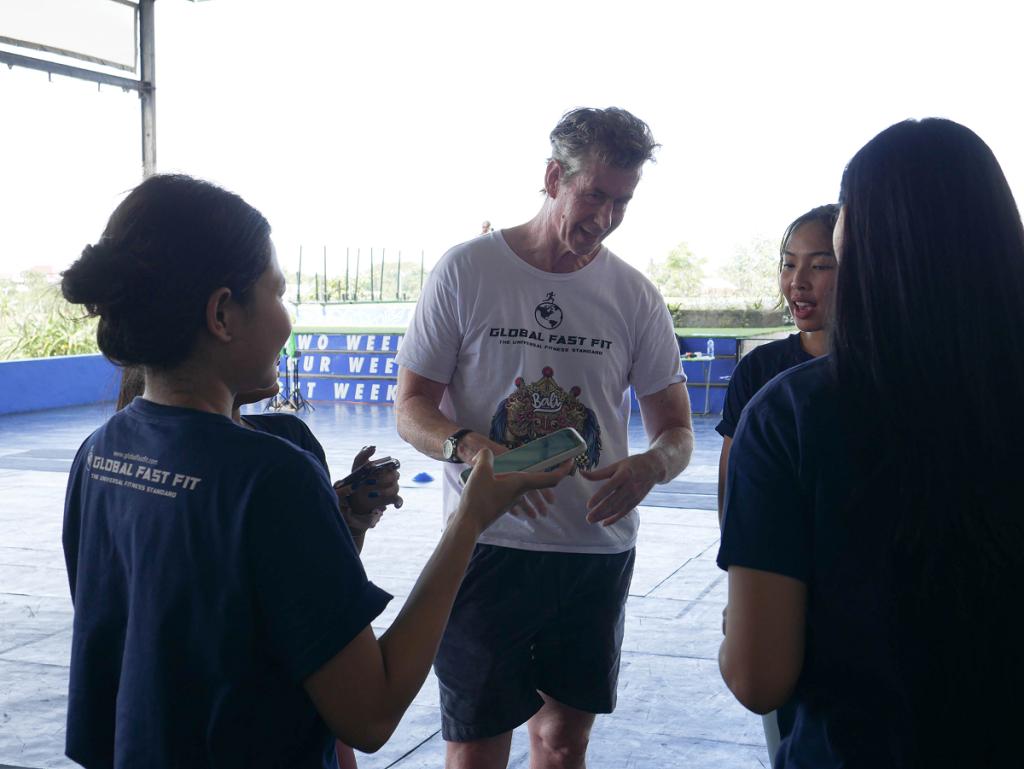
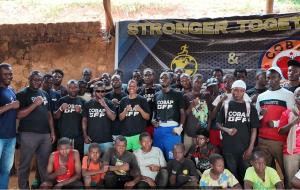
There was no accelerator, no venture capital, and no single office. Instead, the work grew out of real projects in the real world — gyms in Kenya, boxing clubs in Uganda, health programs in rural communities, software teams in India, video datasets in China, creative work in Bali, and a small distributed team working across time zones without institutional backing.
Everything was built with retained earnings, personal loans, and a long time horizon. That constraint forced clarity. When you use your own money, you do not build for headlines. You build for durability. We filed our first patent in 2014
Over time a pattern became obvious. AI models were advancing quickly. Compute was scaling. Data was everywhere.
Over time as we dealt with different projects in different places some questions stayed in my head; how do you prove something is what you say it is; this applies to art in Bali, antiques in Bangkok, assumptions about fitness "proven" by data; I always wanted to go beyond the superficial and understand how something was really made, where it really come from, whether it was really proven.
Why We Started With Movement
We began with human movement, originally because as a fitness guy I wanted a good measure of overall functional fitness, which eventually lead to the creation of our Human Performance Index. But along the way, as Ai was evolving, it became clear that the system we had created needed to evolve to work in a Ai dominated world. And it also became clear that human movement was the perfect training ground for such a system.
To understand a single workout video, you must solve provenance, consent, multimodal data, benchmarking, identity without surveillance, cross-population comparison, and real-world trust.
Global Fast Fit became the proving ground.

 Real people.
Real videos.
Real consent.
Real context.
Real people.
Real videos.
Real consent.
Real context.
 Not synthetic data.
Not lab data.
Not scraped data.
Not synthetic data.
Not lab data.
Not scraped data.
Built in the Data-Center Corridor
From the Opposite Direction
This work is being built minutes from one of the largest concentrations of data centers in the world, in Northern Virginia, the physical backbone of modern AI infrastructure.
Every day, more compute comes online. But the bottleneck is no longer compute.
It is trust.
It is provenance.
It is admissibility.
It is the ability to say what data means, where it came
from, and what decisions it can support.
The hardware for the AI age sits in server farms. The evidence layer has to come from the real world.



A Different Kind of AI Company
Most AI companies start the same way.
Young engineers.
Elite universities.
One office.
Venture capital.
Large burn.
We built the opposite.
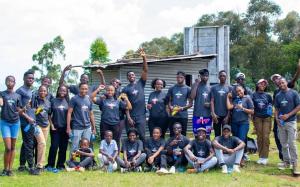
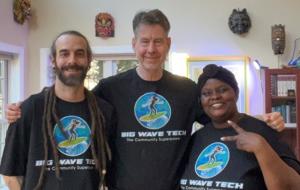
A distributed, global network formed around real projects and real people:



Why This Company Exists
My father's generation built institutions inside the system.
My generation watched those institutions become slower, more complex, and harder to trust.
The next generation of AI will require something different:

a reference layer that sits between data and models

grounded in real-world evidence

explicit standards

and architectures designed for a global, distributed world
That is what DataUniversa is.
Not an app.
Not a dataset.
Not a model.