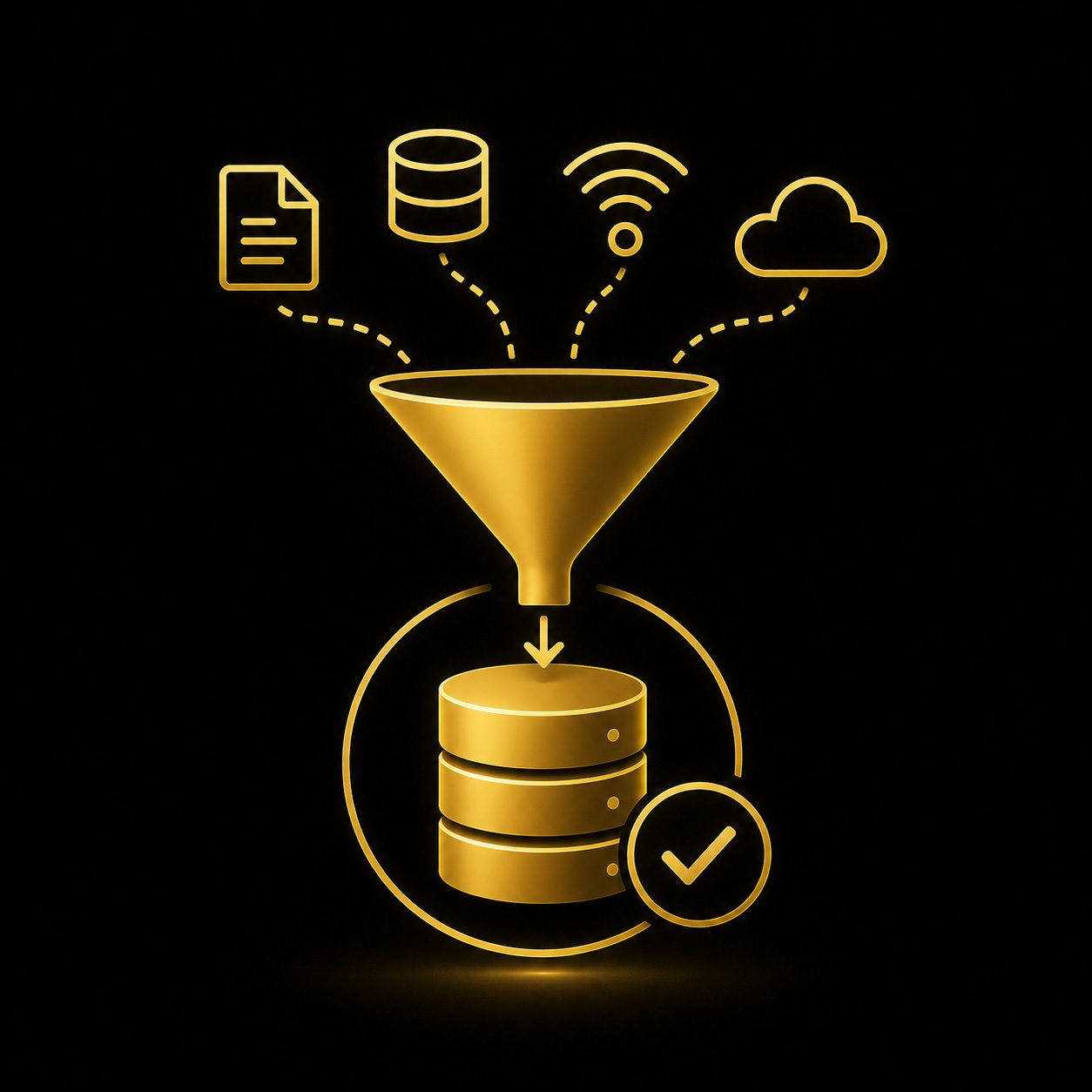
How Do I Know What Data to Collect?
By: John F Groom
One of the most common mistakes in data collection is collecting data before deciding what the data is supposed to accomplish.
Organizations often gather large amounts of information simply because it is available. Months or years later, they discover that much of it cannot be used for AI, analytics, benchmarking, decision-making, or commercial purposes.
At DataUniversa, we believe the question is not:
"What data can I collect?"
The better question is:
"What outcomes am I trying to support?"
Start With the Intended Use
The data required for an AI training dataset is different from the data required for benchmarking, research, operational decisions, or market intelligence.
Before collecting information, organizations should define:
- What questions will the data answer?
- Who will use it?
- What decisions will depend on it?
- How will success be measured?
Without clear objectives, it becomes difficult to determine what information is actually necessary.
Collect for Admissibility
Many organizations collect information that later proves difficult to use because key context is missing.
DataUniversa encourages organizations to collect data in ways that support future admissibility.
This includes documenting:
- Who collected the data
- When it was collected
- How it was measured
- What evidence exists
- How records can be verified
In many cases, these supporting details become as important as the measurements themselves.
Collect for Interoperability
Data rarely creates value in isolation.
Increasingly, organizations want to combine information from multiple sources.
This means data should be collected with interoperability in mind from the beginning.
Questions to consider include:
- Can records be linked to other datasets?
- Are identifiers standardized?
- Are measurements clearly defined?
- Will another organization be able to understand the data?
The Global Model Intelligence Platform (GMIP) was created to help structure information in ways that support future interoperability and reuse.
Collect Only What Creates Value
One lesson repeatedly observed across data projects is that more data does not automatically create more value.
DataUniversa refers to this challenge as Effective Capacity—the ability to collect the information that matters while avoiding unnecessary collection effort.
A smaller dataset designed around a specific objective is often more useful than a much larger dataset with no clear purpose.
Think About Future Audits
Organizations frequently ask later:
- Is this dataset any good?
- Can it be trusted?
- What is it worth?
- Can it be used for AI?
These questions become much easier to answer when provenance, documentation, and verification are built into the collection process from the start.
Retrofitting trust is often far more difficult than collecting it correctly the first time.
A Simple DataUniversa Framework
Before collecting data, ask:
- What outcome am I trying to achieve?
- What information is required to support that outcome?
- How will the data be verified?
- What provenance should be captured?
- Can the data connect to other datasets?
- Will the data be admissible for its intended use?
If these questions cannot be answered, the collection strategy may need refinement.
–
The best data collection strategy is not collecting the most data. It is collecting the right data.
DataUniversa approaches data collection through intended use, admissibility, provenance, interoperability, and Effective Capacity. The goal is to ensure that the information being collected can ultimately be trusted, connected, and used to create meaningful outcomes.
Before asking how much data you can collect, it is often worth asking a simpler question:
What problem is the data supposed to solve?
Whether you're exploring interoperability, dataset valuation, AI readiness, or ecosystem participation, we welcome conversations with researchers, organizations, and strategic partners interested in the future of structured data systems.
info@datauniversa.com