How Much Is My Dataset Worth?
By: John F Groom
There is no universal price for a dataset. The value of a dataset depends on:
- Comparable market transactions
- Data quality
- Provenance
- Interoperability
- Exclusivity
- Buyer demand
The most reliable way to estimate value is to compare your dataset against similar transactions and evaluate how usable the data is for real-world applications.
Why Dataset Valuation Is Difficult
Unlike stocks, commodities, or real estate, there is no central exchange for data. Most dataset transactions occur privately. Prices are often undisclosed, transaction structures vary widely, and two datasets with similar record counts may have dramatically different values. As a result, organizations frequently struggle to answer basic questions:
- Has a similar dataset ever been sold?
- What industries are buying data like mine?
- How active is the market?
- What characteristics increase value?
The Importance of Comparable Transactions
When valuing a company, investors often examine comparable transactions. The same principle applies to data. If organizations have previously licensed, acquired, or purchased datasets similar to yours, those transactions may provide useful signals regarding potential value.
This is one reason DataUniversa created DatFlash.
What Is DatFlash?
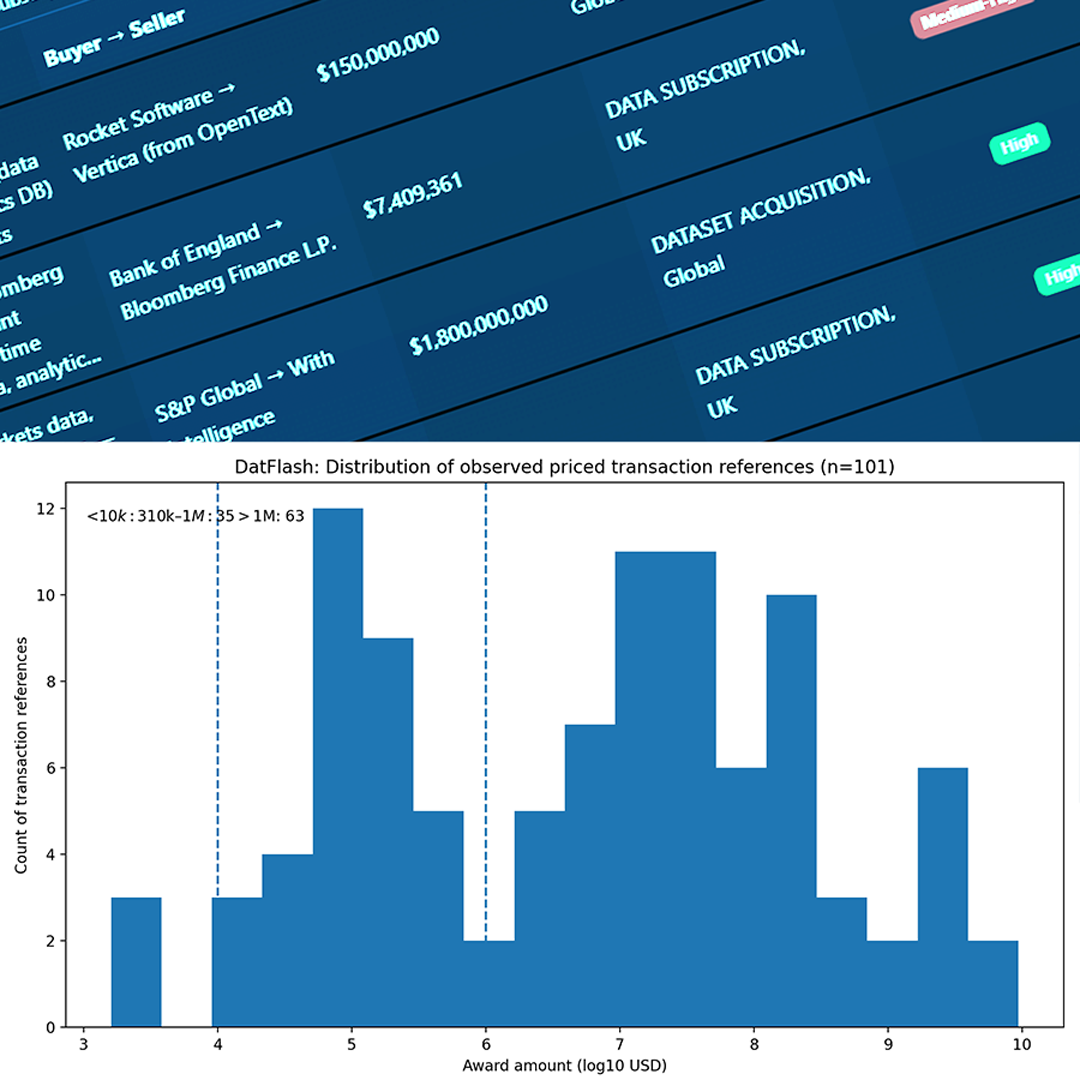
DatFlash is a transaction intelligence system focused on dataset market activity.
Rather than attempting to estimate value solely from theoretical characteristics, DatFlash tracks reported dataset transactions, licensing events, acquisitions, marketplace activity, and other market signals. The objective is to help answer questions such as:
- What types of datasets are being purchased?
- Which industries are active buyers?
- How frequently are transactions occurring?
- What market patterns are emerging?
For many organizations, understanding comparable market activity is the starting point for understanding dataset value.
Beyond Transactions: Why Some Datasets Are Worth More Than Others
Transaction data alone does not explain value. DataUniversa evaluates several additional dimensions that often influence dataset utility and potential market demand:
Provenance
Can the origin of the data be verified?
Admissibility
Can the data be trusted for AI training, analytics, benchmarking, or decision-making?
Interoperability
Can the dataset be combined with other datasets to create new insights?
Coverage
How much of the subject matter does the dataset represent?
Uniqueness
How difficult would it be for another organization to recreate the same dataset?
Demand
Are organizations actively seeking this type of information?
Why Interoperability Can Dramatically Increase Value
One of the largest misconceptions in data valuation is that value comes primarily from the dataset itself. In many cases, value comes from what the dataset can be connected to. A fitness dataset becomes more valuable when connected to health outcomes. A property dataset becomes more valuable when connected to maintenance records. An agricultural dataset becomes more valuable when connected to weather and environmental information.
DataUniversa refers to this as interoperability—the ability of datasets to work together within a larger information ecosystem. In some cases, the value created by combining datasets exceeds the value of any individual dataset alone.
How DataUniversa Approaches Dataset Valuation
DataUniversa views dataset valuation as a combination of two questions:
- What does the market tell us through transaction activity and signals?
- How useful, trustworthy, and interoperable is the dataset itself?
DatFlash helps answer the first question. DataUniversa's admissibility, provenance, and interoperability frameworks help answer the second.
Together, they provide a more complete picture of dataset value than record counts alone.
Whether you're exploring interoperability, dataset valuation, AI readiness, or ecosystem participation, we welcome conversations with researchers, organizations, and strategic partners interested in the future of structured data systems.
info@datauniversa.com