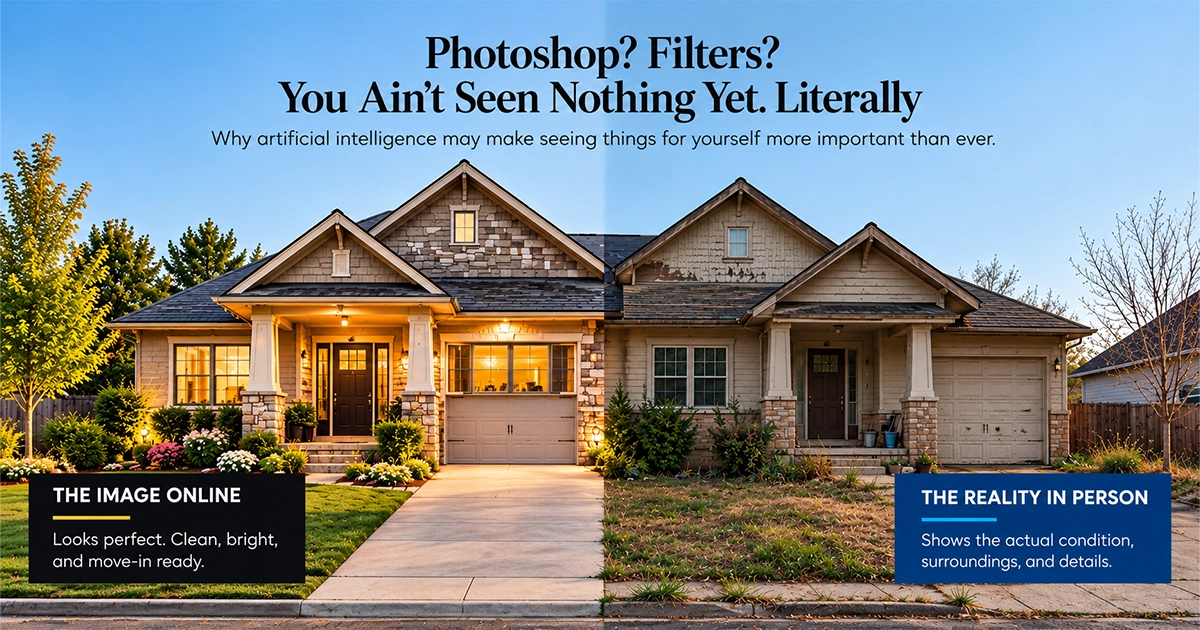
Photoshop? Filters? You Ain’t Seen Nothing Yet. Literally
By John F Groom
Why Artificial Intelligence May Make Seeing Things for Yourself More Important Than Ever
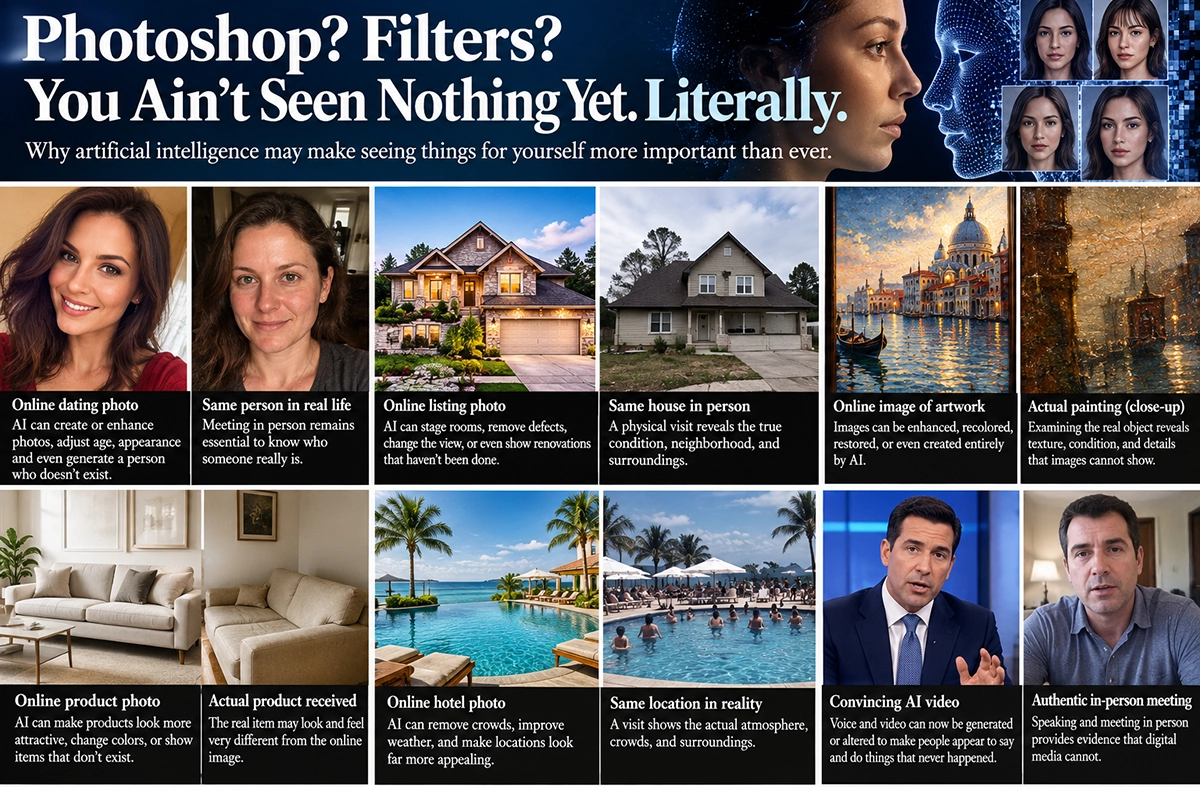
The Return of Looking for Yourself
For most of human history, if you wanted to know what something looked like, you had to go and look at it. To judge a house, a painting, a product, or a potential romantic partner, you generally needed to encounter the real thing. Photography, video, and the internet progressively changed that. They let us evaluate people, places, and objects remotely, with remarkable convenience. Artificial intelligence now introduces a paradox: the better technology becomes at showing us things, the less certain we may be that what we see actually exists. Direct personal observation may consequently become more valuable, not less.
From Enhancing an Image to Inventing a Reality
Manipulating appearances is hardly new. Portrait painters flattered patrons; advertisers staged products; real estate agents used advantageous camera angles. Photoshop and social-media filters made alterations routine. But generative AI goes further. It can create people who never existed, rooms that were never built, products that were never manufactured, and landscapes found nowhere on Earth. A convincing image no longer requires an underlying photograph of an actual subject. As synthetic images become cheaper and more realistic, visual plausibility becomes weaker evidence of authenticity.
Dating: Who Are You Actually Meeting?
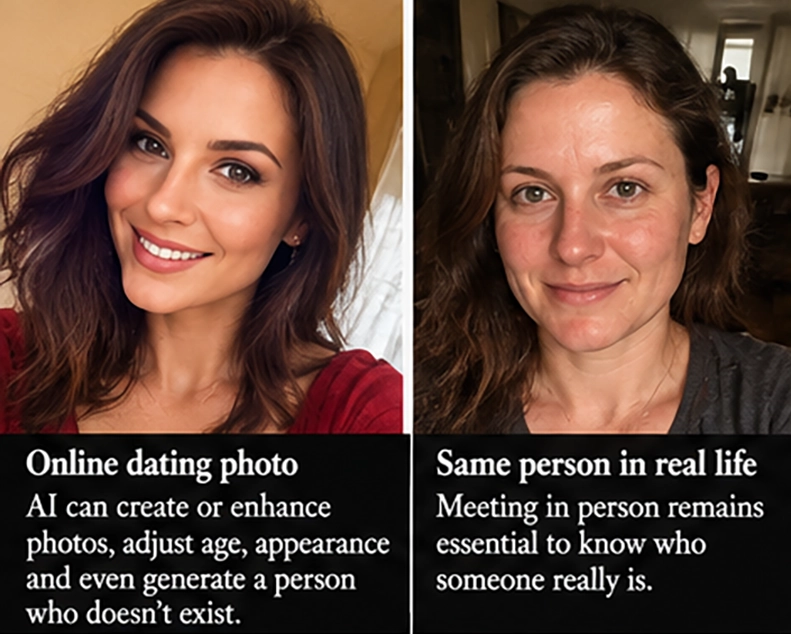
Online dating has long involved selective photographs, flattering angles, and old pictures. AI can now alter age, facial features, body proportions, and apparent surroundings. It can also generate charming messages, biographies, and convincing voices. The impression created through a screen may be partly or largely manufactured. Meeting in person is no guarantee of honesty, but it permits observation of actual appearance, spontaneous reactions, mannerisms, and interactions with the surrounding world. It becomes harder to maintain an entirely fabricated identity when the relationship must eventually take place in ordinary life.
Real Estate: The House That Was Never There
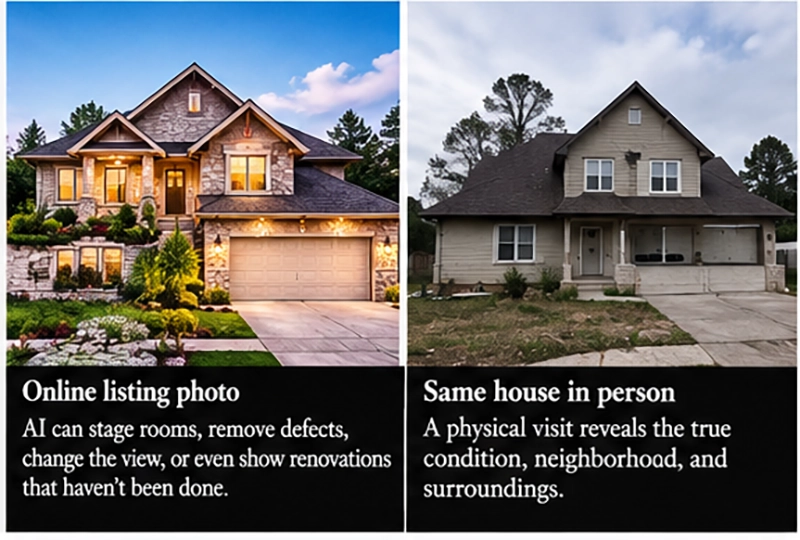
Real estate listings can already make small rooms appear spacious and dark rooms appear bright. AI can digitally furnish an empty house, remove defects, invent renovations, and improve views. Clearly disclosed virtual staging is useful; undisclosed alteration is another matter. Even perfectly authentic photographs cannot convey damp smells, noisy neighbors, construction quality, or the condition of a roof. For an expensive purchase, an actual visit and an independent inspection are not quaint traditions. They provide evidence a digital presentation cannot supply.
Art: The Image Is Not the Object
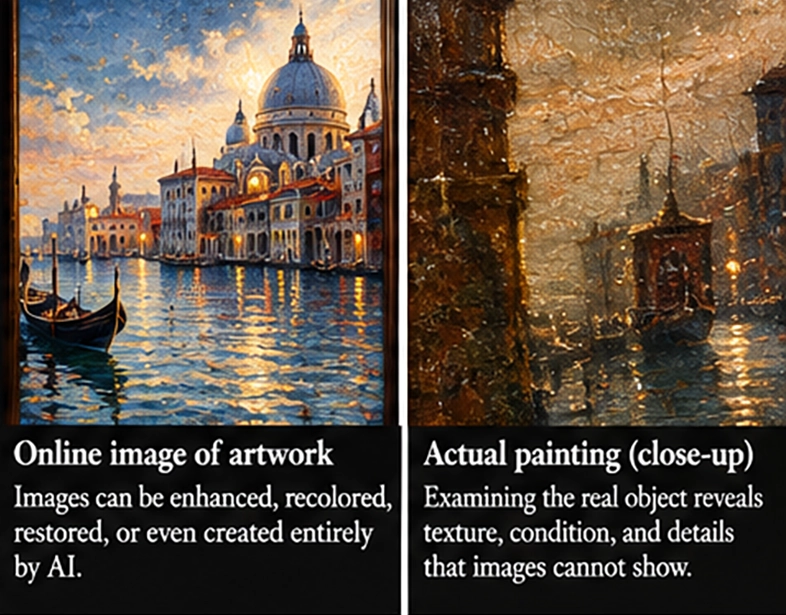
A painting is more than the image reproduced on a screen. Its scale, surface, brushwork, condition, and response to light matter. Digital reproduction can distort color, conceal damage, or exaggerate appeal. AI can invent artworks and produce persuasive descriptions of their significance or provenance. The written account may sound scholarly without being accurate. Physical examination, documented ownership history, and specialist analysis therefore become more important, especially when substantial money is involved.
Products, Hotels, and Restaurants
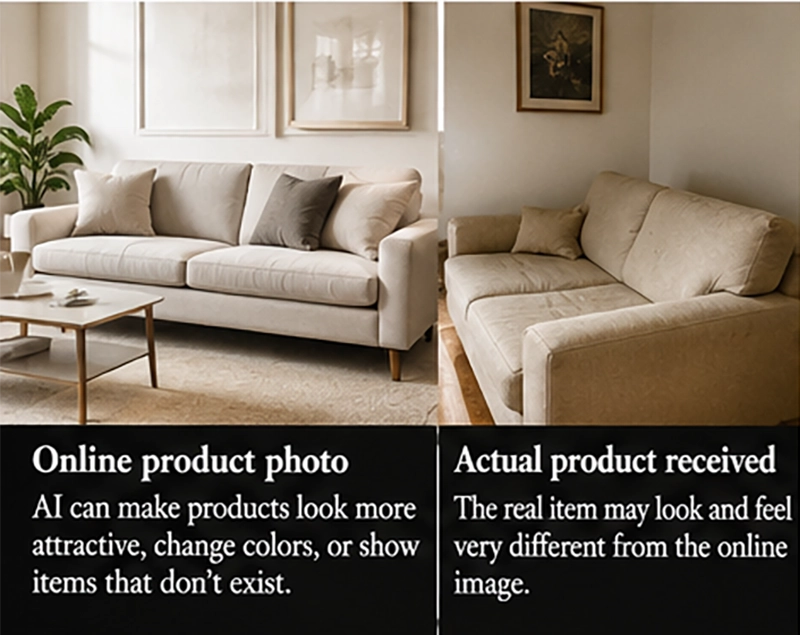
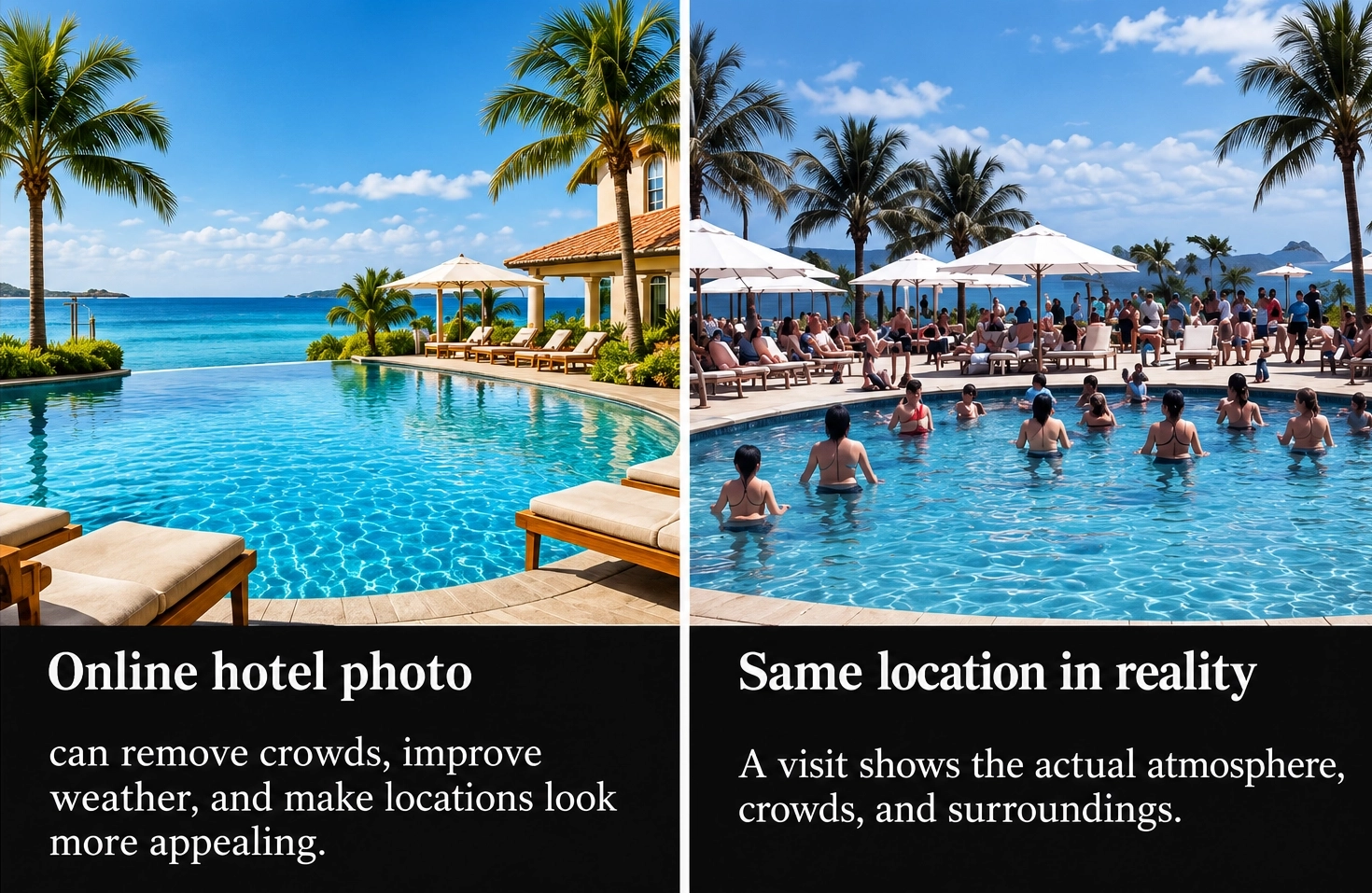
The same problem extends to ordinary purchases. A sofa may look luxurious but be uncomfortable or poorly constructed. A dress may look exquisite in an image but fit badly. A hotel may advertise an empty, sunlit pool that is in reality crowded and noisy. Restaurant photographs can depict meals more attractive than those served. AI can enhance the images and generate seemingly authentic customer reviews. Hundreds of enthusiastic descriptions need not represent hundreds of independent experiences. Where practical, handling a product, visiting a destination, or relying on genuinely independent inspectors offers additional assurance.
Even Video May Not Be Enough
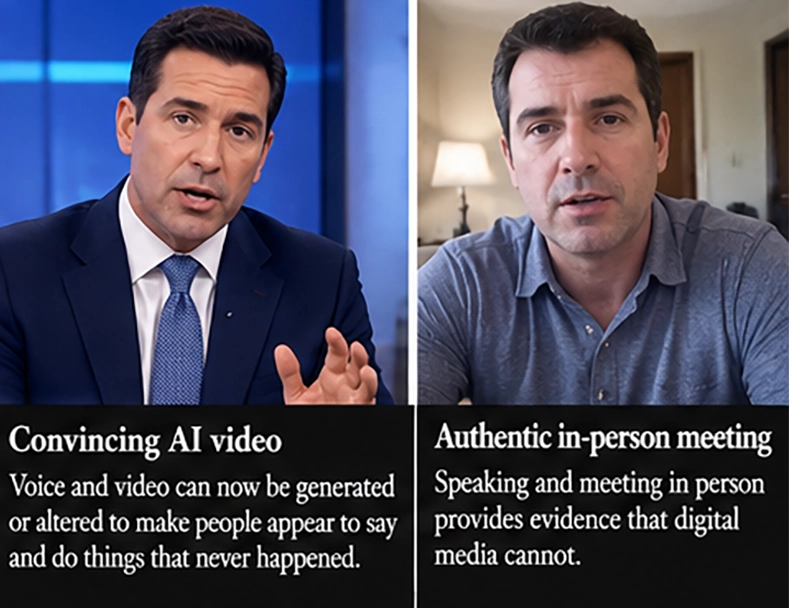
Video once seemed harder to falsify than photographs. Increasingly, convincing moving images, synthetic voices, and manipulated live streams undermine that distinction. A person may appear to say something never said, or a product may appear to perform in a demonstration that never happened. The relevant question is not simply whether a representation is detailed and realistic, but whether its origin can be authenticated and its connection to a real event or object established.
The New Economics of Authentic Observation
Digital technology reduced the cost of obtaining remote information. AI will drive that cost down further. But the cost of producing a convincing representation and the cost of producing trustworthy evidence are not the same. As synthetic content becomes abundant, reliable firsthand observation may become relatively scarce. People who visit properties, inspect goods, authenticate artworks, or verify that a business has the facilities it claims may provide an increasingly valuable service. The same logic applies to trusted local observers and independent inspectors.
Can We Trust Our Own Eyes?
Direct observation is not infallible. A house can conceal defects; a forged painting can fool an expert; a charming person can mislead in person. Personal inspection should therefore complement, not replace, professional evaluation, authenticated records, and independent evidence. Nor does every low-cost purchase justify a physical visit. The stakes matter. The larger the consequences of a mistaken decision, the stronger the case for obtaining evidence beyond an attractive digital representation.
A Market for Proving What Is Real
The spread of synthetic media creates an opportunity for systems that connect representations to independently verified reality. Product images could be linked to authenticated inspections; real estate listings to verified records of actual property conditions; art images to physical objects and documented provenance. Cryptographic signatures, timestamps, trusted identities, and transparent alteration histories can help, though no system is immune to deception. The key value is not more content, but evidence that content corresponds to something real.
The Return of Reality
The digital revolution encouraged us to think physical distance mattered less and less. We could shop, socialize, inspect, and explore without being there. AI will make remote experiences more sophisticated, while also making fabricated experiences more convincing. For consequential decisions, we may increasingly need to do something technology once seemed destined to make unnecessary: get up, go there, look closely, ask questions, and examine the actual thing. Photoshop could change what you saw. Filters could improve what you saw. AI can show you something that was never there at all. That may make seeing things for yourself more important than ever.
Whether you're exploring interoperability, dataset valuation, AI readiness, or ecosystem participation, we welcome conversations with researchers, organizations, and strategic partners interested in the future of structured data systems.
info@datauniversa.com