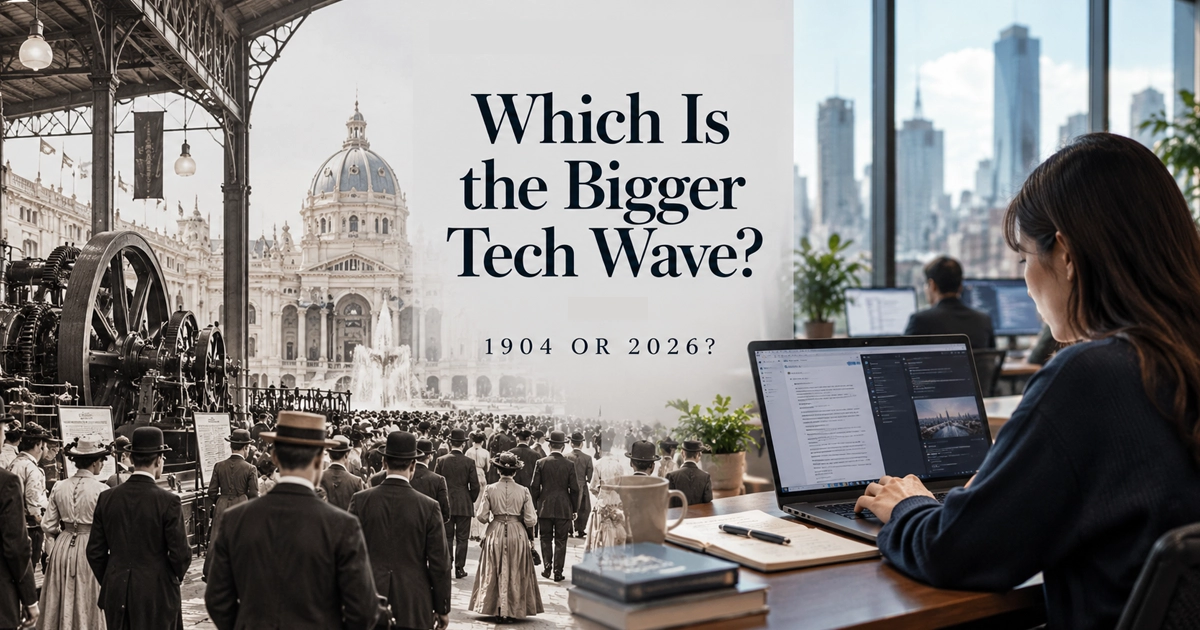
Which Is the Bigger Tech Wave: 1904 or 2026
By: John F Groom
DU Tech Series | September 2026
Stand at the St. Louis World’s Fair in 1904 and the future seems to arrive from every direction. Electric light illuminates the grounds. Motors and machinery fill great halls. Automobiles offer competing answers to the horse. Communications are escaping the limits of letters and wires. Flight has just become possible, although its practical form remains uncertain. Stand in 2026 and the biggest change may appear on the same computer screen you used twenty years ago. Which moment represents the larger technological wave?
My answer depends on what we measure. In the diversity of new capabilities a person could see and touch, the era around 1904 wins. In the possible depth of a general capability that can improve work across nearly every field, 2026 may ultimately win. The mistake is to compare the finished consequences of one era with the first visible interface of the other.
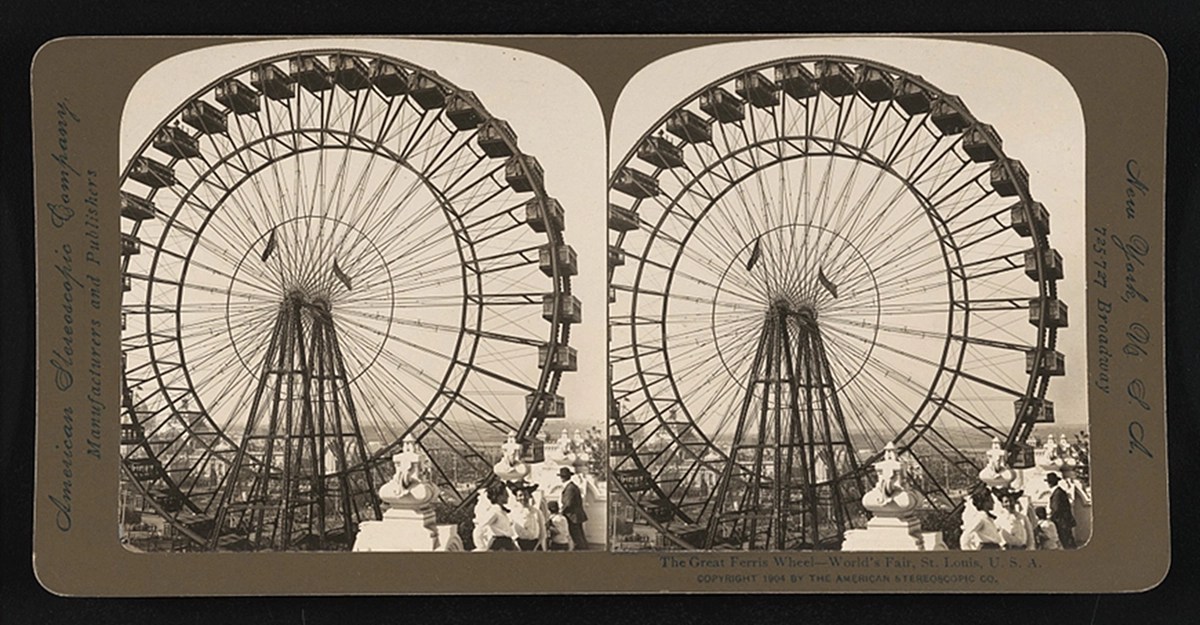
The original Ferris wheel, first built for Chicago in 1893, stood at the 1904 St. Louis fair. Library of Congress, item 2005686728. It symbolizes the fair’s power to concentrate experiences otherwise unavailable to most visitors.
The Future Assembled in One Place
The Louisiana Purchase Exposition did not invent the automobile, telephone, telegraph, electricity, or airplane. It gathered and displayed a world in which those technologies were developing at once. That distinction matters. The fair was a vivid cross section of an age, not the birthplace of all its inventions. A visitor could move among transportation, electricity, machinery, agriculture, communications, and manufactured goods and watch several different boundaries of ordinary life being challenged.
The changes were physically diverse. An engine could replace animal muscle. A car could change personal distance. Electric light could extend activity after sunset. The telephone and wireless experiments could detach conversation from travel. Photography and recorded sound could preserve an event after its participants left. Powered flight, achieved by the Wright brothers in 1903, suggested that even the sky might become a route. No single device delivered all of this. Many technical systems matured together and later combined with roads, factories, fuel networks, electrical grids, and new forms of organization.
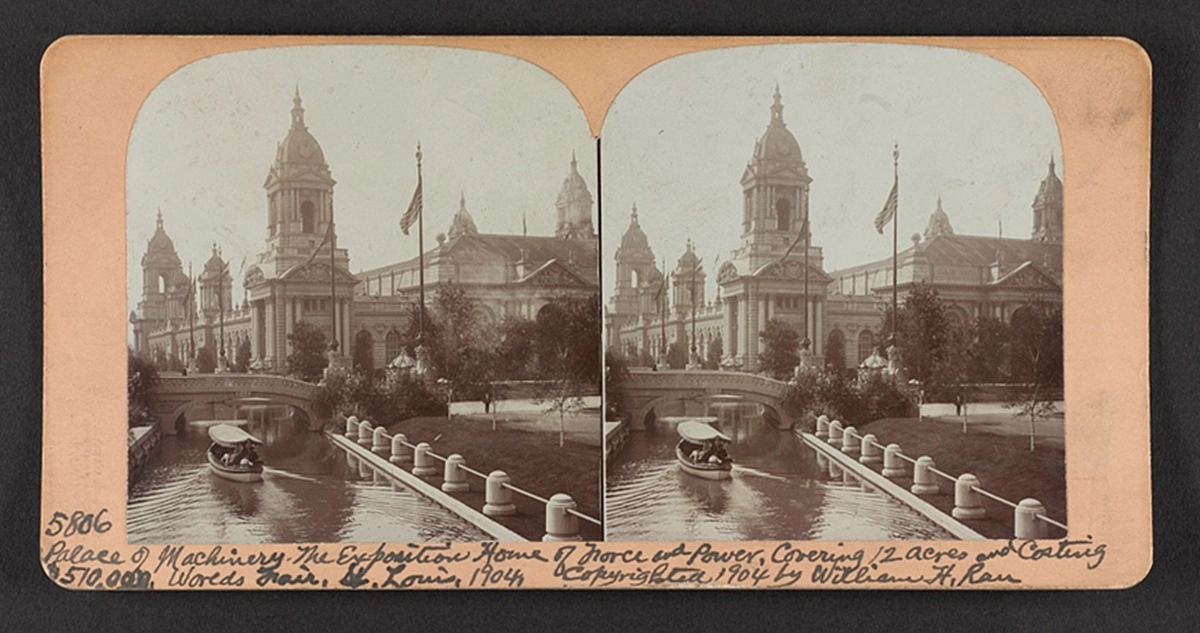
The Palace of Machinery at the 1904 fair. Library of Congress, item 2013649955. The fair made a wide physical frontier visible in one walk.
This helps explain why the great world’s fairs were so compelling. They offered concentrated access to things most people could not otherwise inspect. Today a new machine can be filmed, distributed, explained, and debated worldwide almost immediately. A fair can still let us touch it, but it has largely lost its monopoly on showing us that it exists. The old spectacle belonged to a particular moment: civilization could produce wonders faster than ordinary people could encounter them.
Why 2026 Looks Narrower Than It May Be
Artificial intelligence is already useful across writing, coding, translation, analysis, design, research, and education. Yet much of it reaches us through a familiar screen. Its interface makes a broad technological change look like another software feature. It can improve a medical workflow or help design a machine without immediately changing the shape of the clinic or factory. That is a real difference in lived experience. A 1904 visitor saw multiple physical constraints giving way; a 2026 user often sees a better answer inside an old rectangle.
The apparent narrowness is also misleading. Intelligence is an input to many activities, including the design and coordination of physical systems. AI can contribute to robotics, medicine, materials, manufacturing, transportation, and scientific discovery. Those connections are developing at different speeds. A fluent response on a screen is immediate; a safer treatment, a better industrial process, or a reliable autonomous machine requires testing, integration, regulation, capital, and real world feedback. Potential should not be confused with deployment, but neither should today’s interface define the full size of the wave.
There is a deeper difference in how the waves combine. Around 1904, several distinct inventions were being joined into systems: cars with roads and fuel, electric motors with factories and grids, telephones with business operations. AI starts as a more general capability that can enter many of those systems. Its eventual impact depends on whether it can connect to trustworthy data, usable tools, human purposes, and observed outcomes. A model that generates a plausible answer is valuable. A system that can learn what actually happened and improve the next decision is more consequential.
The DataUniversa Question
For DataUniversa, this comparison is more than historical amusement. The world’s fairs displayed disconnected wonders side by side. The larger opportunity now is to make different kinds of evidence and capability work together. A person’s goal, a physical observation, a dataset, an analytical process, an AI tool, and a resulting action should be able to connect without erasing where each item came from or what it means. The test is whether the connection changes a real decision and whether its result becomes evidence for the next one.
That is why the physical world matters. Video of a workout, a clinic observation, a transaction in a small store, or a field worker’s report is not merely material to feed a model. It is contact with reality. AI becomes more powerful when its conclusions can be checked against events, when uncertainty is exposed, and when people on the ground can collect the missing evidence. In 1904 the public went to one place to see what technology could do. In 2026 the challenge is to connect the places where people already live and work to intelligence that can act on verified information.
A Verdict That Remains Open
If I could spend one day as a visitor in either year, I might choose St. Louis. The range of unfamiliar things visible in one walk would be hard to match. On that measure, 1904 was the bigger wave. But if I had to choose which year might mark the beginning of the more powerful enabling layer, I would choose 2026, with the caution that its physical effects have yet to be fully earned. The answer cannot be settled by a demonstration or a prediction. It will be settled by what these systems actually make possible in the world.
The visitor to St. Louis could see the future arriving from a dozen directions. We may be living through a comparable turning point while it still looks, much of the time, like we are sitting at the same old computer.
Whether you're exploring interoperability, dataset valuation, AI readiness, or ecosystem participation, we welcome conversations with researchers, organizations, and strategic partners interested in the future of structured data systems.
info@datauniversa.com